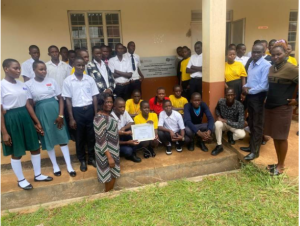
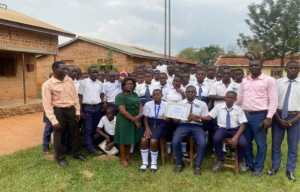
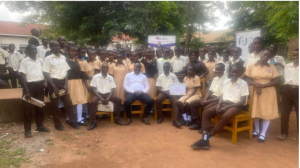
ICT Club Launched at Apopong Seed Secondary School to Boost Digital Skills in Pallisa
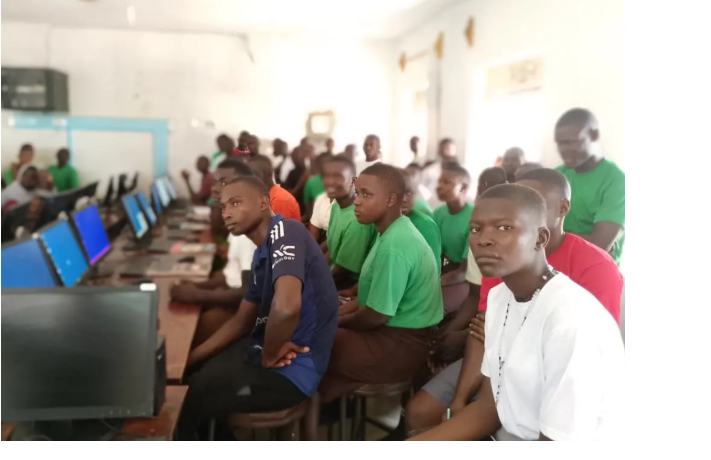
PALLISA DISTRICT, EASTERN UGANDA — Apopong Seed Secondary School has officially joined Uganda’s growing network of digitally empowered institutions following the successful launch and training of its ICT Club on Tuesday, 24th February 2026.
The initiative was facilitated by Noah Okwalinga under the Kisubi Associated Writers Agency (KAWA) through the national ICT Clubs programme supported by the Uganda Communications Commission (UCC) and Uganda Communications Universal Service and Access Fund UCUSAF.
About Apopong Seed Secondary School
Apopong Seed Secondary School is located in Pallisa District, within the Teso and Bukedi sub-region of Eastern Uganda. The district lies approximately 190 kilometers east of Kampala, Uganda’s capital city, making it part of the country’s important eastern development corridor.
The main urban center in the district is Pallisa Town, which serves as the administrative and commercial hub. The school plays a vital role in providing education to learners from surrounding rural communities and is steadily embracing digital transformation to improve learning outcomes.
Purpose of the ICT Club Launch
The launch aimed to officially establish the ICT Club at the school, introduce learners and staff to its objectives, and equip students with practical digital skills that go beyond traditional classroom learning.
The programme focuses on empowering students to become active participants in managing and sustaining ICT resources, especially the school’s computer laboratory.
Learners Show Strong Interest in Digital Skills
At the start of the session, learners expressed enthusiasm and high expectations for the ICT Club. Many hoped to:
- Gain hands-on computer skills
- Learn how to maintain and protect ICT equipment
- Improve internet usage and digital literacy
- Explore coding, innovation, and digital creativity
Others highlighted interest in teamwork, mentorship, and problem-solving, showing a clear desire to prepare for future careers in the digital world.
Building Capacity Through ICT Clubs
During the training, facilitators emphasized that the ICT Club is designed to:
- Strengthen ICT lab sustainability and management
- Promote student responsibility and ownership
- Provide advanced practical ICT skills beyond classroom exposure
This positions learners not just as users of technology, but as innovators and custodians of digital resources.
Official Launch Message
The club was officially launched through a recorded address by UCC Executive Director, Mr. Nyombi Thembo, who underscored the importance of digital skills, innovation, and responsible technology use.
His message inspired students to recognize their role in a national movement aimed at bridging the digital divide and preparing young people for the modern digital economy.
Establishment of Leadership Structures
KAWA worked closely with the school administration, led by Headteacher Musagal Godfrey Anthony, alongside ICT teachers, to establish a functional ICT Club structure.
Student leaders were selected and guided on leadership, accountability, and teamwork. A standard ICT Club constitution template was also provided to ensure smooth and sustainable operations.
Learning Resources and ICT Club Handbook
To support continuous learning, the school received the ICT Club Handbook, which outlines:
- Club management guidelines
- Leadership roles
- Innovation and project development
- Digital skills training pathways
Students were also introduced to the ICT Clubs online platform (www.ictclubs.ug) for access to tutorials and innovation resources.
Digital Skills Training Delivered
The training sessions covered key areas essential for modern digital competence, including:
- ICT lab management and sustainability
- Basic computer maintenance and troubleshooting
- Internet safety and cybersecurity awareness
- Introduction to coding and innovation
- Exposure to Artificial Intelligence concepts
The sessions emphasized practical skills, safe internet practices, and responsible technology use.
Expected Impact of the ICT Club
The ICT Club is expected to deliver significant benefits, including:
- Sustainable and well-managed ICT laboratories
- Increased student leadership and responsibility
- Improved digital literacy and safe internet usage
- Development of practical ICT and innovation skills
- Access to mentorship opportunities through UCC and UCUSAF
Preparing for NCC 2026
Learners were encouraged to actively participate in ICT Club activities as preparation for the National Conference on Communications (NCC) 2026.
This opportunity is expected to inspire students to develop innovative projects, strengthen teamwork, and explore real-world technological solutions.
Strengthening School Support
KAWA also engaged school leadership and ICT teachers to ensure institutional support and sustainability of the club. Emphasis was placed on:
- Regular ICT Club meetings
- Active mentorship by teachers
- Strong administrative support
Challenges Identified
Despite the promising start, several challenges were noted:
- Unreliable power supply
- Limited ICT infrastructure
- Time constraints within the school schedule
- Varying levels of digital literacy among students
Addressing these challenges will be key to the long-term success of the initiative.
The Way Forward
The school has been encouraged to:
- Allocate dedicated time for ICT Club activities
- Strengthen mentorship and leadership support
- Improve ICT infrastructure where possible
- Continue engaging with KAWA, UCC, and UCUSAF
Conclusion
The launch of the ICT Club at Apopong Seed Secondary School marks a transformative step in advancing digital education in Pallisa District. By equipping learners with practical ICT skills, fostering innovation, and promoting responsible technology use, the initiative is shaping a generation ready for the digital future.
KAWA extended appreciation to UCC and UCUSAF for their continued support in expanding ICT Clubs across Uganda, empowering learners and strengthening digital inclusion nationwide.