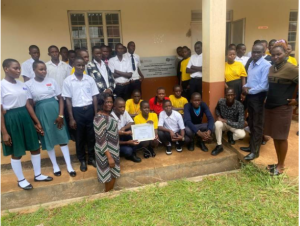
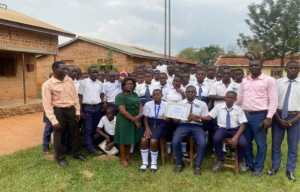
ICT Club Launched at Bufumbo Secondary School to Boost Digital Skills in Mbale District
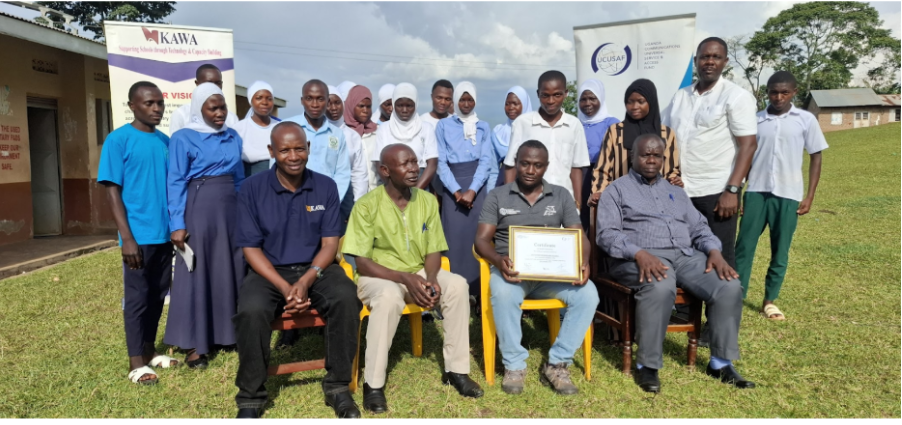
MBALE DISTRICT, EASTERN UGANDA — Bufumbo Secondary School has officially launched its ICT Club in a strategic move to strengthen digital literacy, innovation, and practical technology skills among learners. The launch and training were conducted on Monday, 18th February 2025, facilitated by Moses Wamanga under the Kisubi Associated Writers Agency (KAWA) as part of the national ICT Clubs programme supported by the Uganda Communications Commission (UCC) and the Uganda Communications Universal Service and Access Fund (UCUSAF).
About Bufumbo Secondary School
Bufumbo Secondary School is located in Jewa Parish, Bufumbo, within Mbale District in the Sebei/Bugisu sub-region of Eastern Uganda.
Mbale District lies approximately 280–300 kilometers northeast of Kampala, Uganda’s capital city. The nearest major urban center is Mbale City, which serves as the commercial and administrative hub of the region, supporting surrounding districts including Sironko, Bududa, and Manafwa.
The school serves a rural community and has been progressively embracing ICT as a tool for improving education, fostering innovation, and empowering students with digital competencies.
Purpose of the ICT Club Launch
The primary objective of the visit was to officially establish the ICT Club and introduce learners and school leadership to its goals. The initiative is designed to:
- Equip students with practical ICT skills and innovation capabilities
- Encourage students to use technology to identify and solve real-life community challenges
- Promote responsible and ethical use of ICT resources
Learners Express Strong Interest in Digital Skills
Before the training, learners shared their expectations, highlighting a strong desire to:
- Gain hands-on computer skills beyond classroom theory
- Learn how to maintain and safeguard ICT equipment
- Improve internet usage and digital literacy
- Explore coding, innovation, and digital content creation
Students also expressed interest in mentorship, teamwork, and preparation for future careers in the digital economy.
Building ICT Capacity and Responsibility
During the training, facilitators explained that the ICT Club aims to:
- Strengthen ICT laboratory management and sustainability
- Promote student ownership and responsibility in handling ICT resources
- Provide practical digital skills that extend beyond the standard curriculum
This ensures learners actively participate in maintaining and utilizing school ICT infrastructure.
Training Resources and Learning Support
KAWA provided a wide range of training materials, including:
- PowerPoint presentations
- Practical demonstrations
- Case studies and interactive learning activities
Learners were also introduced to the ICT Clubs online platform (www.ictclubs.ug) to access tutorials, innovation resources, and continuous learning opportunities.
Official Launch Message
The ICT Club launch featured a recorded message from UCC Executive Director Mr. Nyombi Thembo, emphasizing:
- The importance of digital skills and innovation
- Responsible and ethical use of technology
- The role of students in sustaining school ICT laboratories
His message reinforced the national significance of the programme and inspired learners to engage actively.
Establishment of ICT Club Leadership
KAWA worked closely with the school administration, led by Headteacher Mr. Magomu Yusuf, alongside ICT teachers including Mr. Bwire Amuza, to establish a structured ICT Club leadership system.
Students were guided on:
- Leadership roles
- Accountability
- Effective management of the club
A standard ICT Club constitution template was also provided to support club operations.
Digital Skills Training Conducted
Learners received foundational training in areas such as:
- ICT lab management and sustainability
- Basic computer maintenance and troubleshooting
- Internet safety and cybersecurity awareness
- Introduction to coding, innovation, and Artificial Intelligence
The sessions emphasized practical skills, safe technology use, and problem-solving capabilities.
Expected Impact of the ICT Club
The ICT Club is expected to:
- Promote sustainable use and maintenance of ICT laboratories
- Enhance student leadership and responsibility
- Encourage safe and ethical use of technology
- Equip learners with practical skills in coding, innovation, and digital creation
- Provide opportunities for mentorship through UCC and UCUSAF
Preparing Learners for NCC 2026
Students were informed about future participation in the National Conference on Communications (NCC) 2026, where they can showcase innovative ICT projects.
This initiative is designed to inspire learners to develop impactful solutions and actively engage in national technology platforms.
Strengthening School Support
KAWA engaged with school leadership and ICT teachers to emphasize:
- Regular ICT Club meetings
- Continuous mentorship and guidance
- Strong institutional support for sustainability
Staff members who participated in the training included Magomu Yusuful, Nandudu Shamim, Wambedde Moses W., and Bwire Amuza, among others.
Challenges Identified
Some challenges noted during the training include:
- Unreliable power supply
- Limited ICT infrastructure
- Limited time allocation for club activities
- Low digital literacy among some learners
Addressing these challenges will be essential to ensure the long-term success of the ICT Club.
Recommendations
To strengthen the ICT Club’s impact, the following recommendations were made:
- Allocate regular time for ICT Club activities
- Strengthen support from school administration and ICT teachers
- Provide continuous mentorship and follow-up training
- Improve ICT infrastructure and ensure reliable power supply
Conclusion
The launch of the ICT Club at Bufumbo Secondary School marks a significant milestone in advancing digital education in Mbale District.
By equipping learners with practical ICT skills, promoting innovation, and fostering responsible technology use, the initiative prepares students for future opportunities in the digital economy, including participation in NCC 2026.
KAWA expressed appreciation to UCC and UCUSAF for their continued support in expanding ICT Clubs across Uganda and empowering learners with essential digital competencies.