ICT Club Launched at Palam Seed Secondary School to Advance Digital Innovation in Katakwi District

Katakwi District, Teso Sub-Region — February 25, 2026
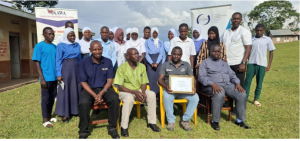
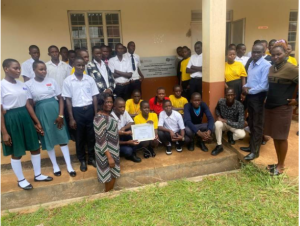
Students at Palam Seed Secondary School in Katakwi District have begun a new journey toward digital empowerment following the successful launch and training of the school’s ICT Club. The initiative was facilitated by Kisubi Associated Writers Agency (KAWA) under the national ICT Clubs programme supported by the Uganda Communications Commission (UCC) through the Uganda Communications Universal Service and Access Fund (UCUSAF).
The launch introduced learners and teachers to the vision of ICT Clubs in Uganda—equipping students with practical digital skills, innovation capacity, and responsible use of technology while encouraging them to use ICT to address challenges within their communities.
A Growing Centre of Learning in Katakwi District
Palam Seed Secondary School is located in Palam Sub-county within Usuk County, Katakwi District, in the Teso Sub-Region of Eastern Uganda. The school lies approximately 350 kilometres northeast of Kampala, Uganda’s capital city, and about 32 kilometres from Katakwi Town, the district’s main administrative and commercial centre.
Serving learners from surrounding rural communities, the school plays an important role in expanding access to secondary education and preparing young people for opportunities in the modern economy.
The ICT Club launch and training were facilitated by Kyasima Freedom, with strong support from the school leadership led by Headteacher Mr. Otai Charles. The ICT Club activities are coordinated by Mr. Imalingat Samuel, the ICT Club patron.
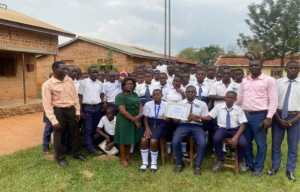
A total of 51 students participated in the training session, showing strong enthusiasm for learning digital skills and innovation.
Students Eager to Explore Technology
At the start of the training, learners were invited to share their expectations for the ICT Club.
Many students expressed interest in gaining hands-on computer skills beyond traditional classroom learning, while others hoped to explore coding, internet research, and digital creativity.
Several learners also indicated that they expected the ICT Club to help them develop teamwork, leadership abilities, problem-solving skills, and creative thinking, which could prepare them for future careers in technology and innovation.
Building Responsible Digital Citizens
During the orientation session, facilitators explained that ICT Clubs are designed not only to teach technology but also to cultivate responsible digital citizens.
Learners were encouraged to use technology ethically, safely, and creatively, while also playing an active role in maintaining and protecting ICT equipment within the school laboratory.
Through the ICT Club, students will participate in activities that promote digital literacy, innovation, and community-based problem solving.
Practical Training in Digital Skills
The training session introduced learners to several essential ICT skills, including:
- Basic computer maintenance and troubleshooting
- ICT laboratory management and sustainability
- Safe and responsible internet use
- Cybersecurity awareness
- Introduction to coding and digital innovation
These practical lessons were designed to help students develop skills that go beyond classroom theory, enabling them to apply technology to real-world challenges.
Learners were also introduced to online ICT learning resources and platforms that can support continued learning and innovation activities.
Establishing the ICT Club Leadership
During the visit, KAWA worked with the school administration and teachers to formally establish the ICT Club and create a student leadership structure responsible for coordinating club activities.
Student leaders were selected to mobilize members, organise meetings, and guide project activities.
To support the club’s organisation, the school also received an ICT Club Handbook and a model constitution, which will guide governance, participation, and innovation activities throughout the year.
Preparing Students for NCC 2026
Students were informed that ICT Club members across the country are being prepared to participate in the National Conference on Communications (NCC) 2026, where learners will showcase innovative projects developed through school ICT clubs.
This announcement inspired students to begin thinking about technology-driven solutions that can address challenges within their communities, while strengthening collaboration and creativity within the club.
Participation in NCC will also provide students with mentorship opportunities, exposure to national ICT initiatives, and platforms for innovation.
Engagement with School Leadership
The KAWA team also held discussions with the headteacher, ICT Club patron, and other school leaders to strengthen support for the ICT Club programme.
These discussions emphasized the importance of regular ICT Club meetings, teacher mentorship, and strong administrative support in ensuring that the club remains active and impactful.
Challenges Identified
Despite the successful launch of the ICT Club, several challenges were identified that could affect the smooth running of ICT activities.
One major challenge is unreliable power supply, which makes it difficult to consistently operate computers, projectors, and other digital equipment during training sessions. Another challenge is poor internet connectivity, which limits access to online learning materials, research opportunities, and communication with broader digital learning platforms.
Recommendations for Strengthening the ICT Club
To strengthen ICT learning at the school, several recommendations were proposed.
The school was encouraged to explore alternative power solutions, such as solar energy systems or backup power sources, to ensure that ICT equipment can be used consistently during club sessions.
There is also a need to improve internet connectivity, enabling students and teachers to access digital learning resources, conduct online research, and fully participate in technology-driven learning.
With improved infrastructure and continued mentorship, the ICT Club has the potential to become a centre of innovation and digital creativity within the school.
A Promising Future for ICT Innovation in Katakwi
The launch of the ICT Club at Palam Seed Secondary School represents an important step in expanding digital education and innovation opportunities for learners in Katakwi District and the wider Teso Sub-Region.
With enthusiastic students, committed teachers, and continued support from KAWA in partnership with the Uganda Communications Commission, the ICT Club is expected to grow into a vibrant platform for technology learning, creativity, and problem solving.
The initiative contributes to a broader national effort aimed at preparing young people with the digital skills required to thrive in the modern world and contribute to Uganda’s development.