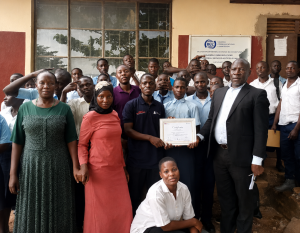
ICT Club Launched at Dokolo Girls Secondary School to Inspire Digital Innovation in Lango Sub-Region

Dokolo District, Lango Sub-Region — February 26, 2026
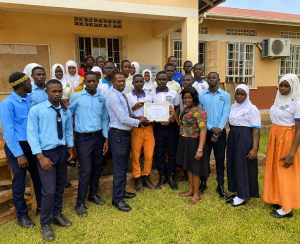
Students at Dokolo Girls Secondary School in Dokolo District have officially joined Uganda’s growing movement of young digital innovators following the successful launch and orientation of the school’s ICT Club. The activity was conducted by KAWA CONNECT (Kisubi Associated Writers Agency) in partnership with the Uganda Communications Commission (UCC) through the Uganda Communications Universal Service and Access Fund (UCUSAF) programme.
The initiative is part of a nationwide effort to strengthen digital literacy, innovation, and technology-based problem solving among learners in secondary schools across Uganda.
Location and Background of the School
Dokolo Girls Secondary School is located in Acoto Village in Adagmon Parish within Dokolo Sub-county, Dokolo District, in the Lango Sub-Region of Northern Uganda. The school lies approximately 330 kilometres north of Kampala, Uganda’s capital city, and about 12 kilometres from Dokolo Town, the district’s main administrative and commercial centre.
The school serves girls from surrounding rural communities and plays a significant role in promoting girls’ education and leadership in the region. With the establishment of the ICT Club, the school is creating new opportunities for students to explore technology, innovation, and digital learning.
Introducing Students to Technology and Innovation
The ICT Club launch and training session was facilitated by Kyasima Freedom under the KAWA CONNECT ICT Clubs programme. The school is headed by Mrs. Acio Lily Grace, while Mr. Otim Raphael serves as the ICT Club patron, guiding students in technology learning and innovation activities.
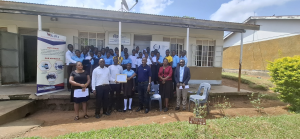
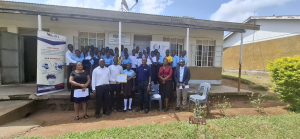
During the session, 45 students participated in the orientation and training, demonstrating strong enthusiasm for the new digital learning opportunity.
Learners were encouraged to view technology not only as a tool for communication but also as a powerful resource for identifying community challenges and designing innovative solutions.
Students Express Excitement About Digital Skills
Before the training activities began, learners were invited to share their expectations from the ICT Club.
Many students expressed interest in gaining practical computer skills beyond normal classroom lessons, learning coding and digital creativity, and exploring ways technology can be used to address challenges within their communities.
Other learners noted that the ICT Club could help them develop teamwork, leadership abilities, and innovative thinking, which are essential skills for the modern digital economy.
These aspirations demonstrate the growing interest among young people in technology-driven careers and digital innovation.
Building Student Responsibility for ICT Resources
One of the major goals of the ICT Club programme is to empower students to take an active role in maintaining and protecting ICT equipment within their schools.
During the training, learners were guided on the importance of student ownership and responsibility in managing school ICT resources, including proper handling of computers and promoting safe digital practices.
Through this initiative, students will support the sustainability of the school’s ICT laboratory while simultaneously gaining valuable technical and leadership skills.
Educational Resources and Learning Materials
To support the training, facilitators used a variety of instructional resources including presentations, demonstrations, guided discussions, and practical examples related to digital skills and technology innovation.
Students were also introduced to learning resources that can help them continue developing their digital knowledge beyond the training session.
These materials will support the ongoing activities of the ICT Club throughout the school year, ensuring that learners continue to build their digital competence.
Official Launch of the ICT Club
The ICT Club at Dokolo Girls Secondary School was officially launched during the visit, marking the school’s entry into the national ICT Clubs network.
Students were informed that the club forms part of a national programme aimed at promoting digital skills, innovation, and responsible use of technology among young people in Uganda.
This helped learners appreciate the broader impact of the initiative and motivated them to take an active role in technology-based learning and innovation.
Establishment of ICT Club Leadership
During the visit, arrangements were made with the school administration to establish a student leadership structure for the ICT Club.
Student leaders were selected to coordinate club activities, encourage participation, and help ensure the sustainability of the initiative.
Learners were guided on leadership responsibilities, teamwork, accountability, and effective organisation of club programmes.
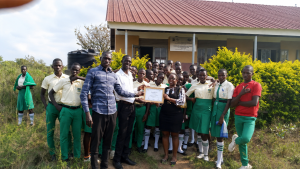
A sample ICT Club constitution was also shared with the school to support proper governance and management of the club.
Additionally, the ICT Club Handbook was provided to the school to guide club operations, innovation activities, and digital skills development throughout the year.
Digital Skills Training Conducted
During the training session, learners were introduced to several important digital skills areas, including:
- ICT laboratory management and sustainability
- Introduction to coding and digital innovation
- Internet safety and cybersecurity awareness
- Responsible use of digital tools and technology
- Technology-based problem solving for community development
The training emphasized the importance of using technology creatively and responsibly to support learning and community transformation.
Preparing Learners for National ICT Competitions
Students were also informed about opportunities to participate in national ICT innovation platforms such as the Annual National Conference on Communications (ANCC).
Learners were encouraged to actively participate in club activities and begin developing innovative technology ideas and projects that could eventually be showcased at national competitions.
This opportunity motivated students to think creatively about technology solutions that can benefit their communities.
Engagement with School Leadership
The KAWA CONNECT team also held discussions with the school administration, ICT Club patron, and teachers to strengthen institutional support for the programme.
These discussions emphasized the importance of regular ICT Club meetings, mentorship from teachers, and continuous encouragement of learners to participate in innovation activities.
Strong collaboration between teachers, school leadership, and students will be essential in ensuring the long-term success of the ICT Club.
Key Challenge Identified
During the visit, one major challenge affecting ICT learning at the school was identified: lack of a reliable electricity supply.
Although there are plans by UECDL to extend electricity to the school, the connection has not yet been completed. This limits students’ ability to regularly use computers and other digital equipment for practical learning.
Without reliable power, opportunities for coding practice, computer training, and technology innovation activities remain limited.
Recommendations for Strengthening ICT Learning
To support the sustainability of the ICT Club and strengthen digital learning at the school, several recommendations were made.
The school was encouraged to prioritise securing a stable electricity supply, either through the extension of the national power grid or by exploring alternative energy solutions such as solar power systems.
Reliable electricity will enable students to fully utilise ICT equipment and expand their learning opportunities.
Continued mentorship and support from the national ICT Clubs programme and the Uganda Communications Commission will also help learners develop stronger digital skills and innovative ICT projects.
Promoting Digital Empowerment for Girls
The successful launch of the ICT Club at Dokolo Girls Secondary School demonstrates the growing interest among girls in technology, innovation, and digital leadership.
Despite the current infrastructure challenges, the enthusiasm shown by both students and teachers highlights the strong potential for the ICT Club to grow into a vibrant platform for digital learning and innovation.
With continued support from KAWA CONNECT and the Uganda Communications Commission, the ICT Club is expected to nurture young female innovators and future technology leaders in the Lango Sub-Region.