Kagumu Secondary School Ignites a New Digital Spark Through ICT Club Launch
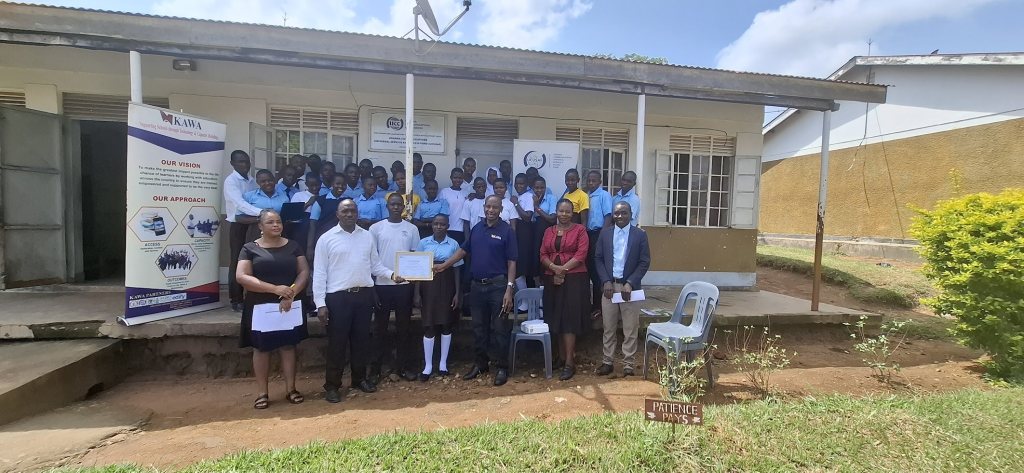
At Kagumu Secondary School in Kibuuku District, the launch of the ICT Club created a fresh moment of excitement for learners who are ready to explore technology beyond the classroom.
The activity, facilitated by Noah Okwalinga on behalf of Kisubi Associated Writers Agency (KAWA), took place on 25th February 2026 under the ICT Clubs programme supported by the Uganda Communications Commission (UCC) and UCUSAF.
This was not only a launch ceremony. It was an invitation for learners to begin seeing themselves as young digital thinkers, creators, problem-solvers, and future innovators.
A Moment of Discovery for Learners
The session began with learners sharing what they hoped to gain from joining the ICT Club. Their expectations showed strong interest in practical learning. Many wanted to improve their computer skills, understand how to use the internet better, and learn how to maintain and protect ICT equipment.
Others were curious about coding, digital creation, innovation, and how technology can be used to solve problems in their communities. Some learners also looked forward to mentorship, teamwork, and preparation for future careers in the digital world.
These responses showed that the club had arrived at the right time. The learners were ready not only to use technology, but to understand it, practise it, and apply it meaningfully.
Turning ICT into a Learner-Led Movement
During the orientation, the KAWA team helped learners understand that the ICT Club is not just another school club. It is a learner-led platform where students can build responsibility, teamwork, creativity, leadership, and practical digital confidence.
The club is expected to help learners take ownership of the school computer laboratory, support the proper use of ICT equipment, and contribute to sustaining digital resources within the school.
Learners were encouraged to think beyond ordinary computer lessons and begin identifying real problems that technology can help solve. This message positioned the ICT Club as a space for action, experimentation, and innovation.
School Leadership Supports the Digital Journey
The school leadership, led by Headteacher Mr Sewankambo Mahmoud, together with ICT Teacher Mr Dambire Conelio, welcomed the programme and engaged with KAWA on how the ICT Club can be supported at school level.
Their involvement was important because successful ICT Clubs need more than learner interest. They need regular guidance, teacher support, time for activities, proper organisation, and school ownership.
The launch therefore helped connect learners, teachers, and school leadership around one shared goal: building a stronger digital learning culture at Kagumu Secondary School.
Skills Introduced During the Training
The training introduced learners to several practical ICT areas, including ICT laboratory management, basic computer maintenance, troubleshooting, internet safety, cybersecurity awareness, coding, innovation, and introductory ideas in Artificial Intelligence.
KAWA used PowerPoint presentations, practical demonstrations, case studies, and interactive exercises to make the session engaging and easy to follow. Learners were also introduced to the ICT Clubs website, www.ictclubs.ug, where they can access tutorials, learning materials, and innovation resources after the launch.
The session helped students understand that digital skills are useful not only for schoolwork, but also for communication, research, innovation, entrepreneurship, and future employment.
A National Message Reaches Kagumu
The official launch was supported by a recorded speech message from the Executive Director of UCC, Mr Nyombi Thembo. His message emphasised the importance of digital skills, responsible use of technology, innovation, and learner participation in sustaining school ICT laboratories.
For the learners at Kagumu Secondary School, this message helped them understand that their ICT Club is part of a wider national programme aimed at preparing young people across Uganda for the digital future.
It reminded them that technology should be used responsibly, creatively, and productively.
Building Structures for Sustainability
KAWA worked with the school administration, ICT teacher, and learners to establish the ICT Club and guide the formation of student leadership structures. Learners were helped to understand why leadership, accountability, teamwork, and commitment are important for the success of the club.
A standard ICT Club constitution template was shared with the school to guide formal club operations. The ICT Club Handbook was also provided to support the patron, teachers, and student leaders in organising meetings, planning activities, managing responsibilities, and promoting innovation throughout the year.
These structures are expected to help the club remain active beyond the launch day.
Looking Towards Future Innovation Platforms
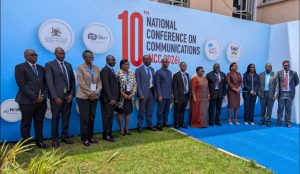
Learners were informed about future opportunities such as the Annual National Conference on Communications, ANCC 2026. This encouraged them to take club activities seriously and begin thinking about practical ICT projects that could represent their school in innovation spaces.
The ICT Club is expected to help students develop practical ICT skills, practise safe and ethical technology use, explore coding and digital creation, and participate in mentorship and innovation opportunities.
Challenges That Need Continued Support
The visit also noted some likely challenges that may affect the growth of the club. These include unreliable power supply, inadequate ICT infrastructure, limited time for club activities, low digital literacy among some learners, and the need to sustain momentum after the launch.
These challenges show the need for continued planning, teacher guidance, follow-up mentorship, and improved ICT infrastructure.
The Way Forward for Kagumu Secondary School
Kagumu Secondary School is encouraged to allocate regular time for ICT Club activities, strengthen support from the administration and ICT teacher, and continue receiving mentorship and follow-up training from KAWA, UCC, and UCUSAF.
Improved ICT infrastructure and reliable power will help the club grow into a stronger centre for digital learning, creativity, and innovation.
The launch at Kagumu Secondary School marked an important beginning. It gave learners a platform to move from curiosity to action, from computer use to problem-solving, and from classroom knowledge to practical digital innovation.
With continued support, the ICT Club can become a powerful space for learner leadership, responsible technology use, digital confidence, creativity, and future-ready skills.
KAWA sincerely appreciates UCC and UCUSAF for their continued support towards the establishment and training of ICT Clubs in schools across Uganda.