From Curiosity to Innovation: St. Peter Namalikya Learners Begin Their ICT Club Journey
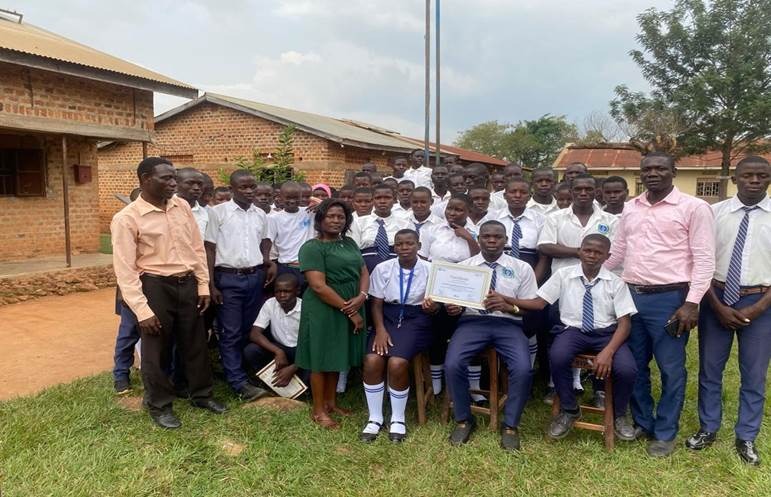
At St. Peter Namalikya Secondary School in Buyende District, the ICT Club launch became more than a formal school activity. It was a moment of awakening for learners to begin seeing technology as a tool for creativity, problem-solving, and community transformation.
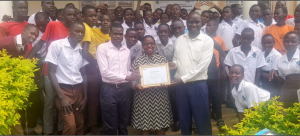
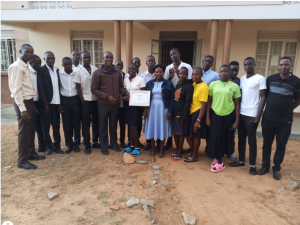
The launch and training took place on 26th February 2026 at the school in Namalikya Sub-county. The activity was conducted by Wanyana Valeria from the KAWA ICT Clubs Team as part of the national ICT Clubs programme supported by UCC and UCUSAF.
The visit aimed at officially launching the ICT Club, introducing learners and teachers to the objectives of the programme, and encouraging students to use technology and innovation to identify real challenges within their school and surrounding community. The session also helped learners understand that ICT is not only about using computers, but also about thinking critically, creating solutions, working in teams, and preparing for future opportunities.
The training brought together 58 students from Senior One to Senior Six, together with one teacher. The school was represented by the ICT Club Patron, Mr William Ndyaba, and the Headteacher, Mr Maseege Simon Peter, who welcomed the programme and expressed support for the growth of ICT activities at the school.
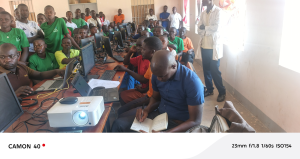
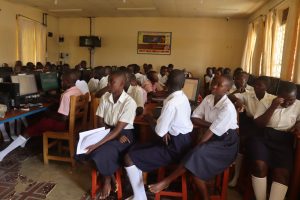
During the session, learners were introduced to the purpose of ICT Clubs and how such clubs can help schools strengthen digital learning. They were sensitised about technology, digital skills, innovation, and responsible use of ICT resources. The training also introduced students to the idea of developing practical ICT projects that can respond to real-life problems.
Using a laptop and projector, the KAWA team guided learners through the objectives of the ICT Clubs programme and explained how students can participate in future innovation opportunities, including the NCC ICT Competition and other UCC/UCUSAF-supported engagements on ICT matters.
A strong message shared during the launch was that every learner has the potential to become an innovator. Students were encouraged to begin by observing the challenges around them, discussing possible solutions as a team, and using the ICT Club as a platform for learning, experimentation, and creativity.
The visit also created an opportunity for engagement with the school administration and the ICT Club patron. Discussions focused on how the club will operate within the school, the importance of regular meetings, and the need for teacher guidance in helping learners develop meaningful projects.
Some challenges were noted during the visit. Limited internet connectivity may affect access to online learning resources, while teacher training and ICT competency remain important areas for further support. It was also observed that only one teacher had a smartphone, which highlights the need for continued investment in digital access and teacher capacity building.
Despite these challenges, the launch at St. Peter Namalikya Secondary School was successful and well received by both learners and the school administration. The school expressed commitment to supporting ICT Club activities and preparing students to participate in technology innovation programmes and competitions.
Going forward, the school is encouraged to allocate regular time for ICT Club meetings, support the patron in guiding learners to develop projects that solve real community problems, and continue seeking ways to improve access to ICT equipment and digital learning resources.
The ICT Club at St. Peter Namalikya Secondary School now stands as a promising platform for nurturing digital skills, learner confidence, teamwork, and innovation. With continued support from the school, KAWA, UCC, and UCUSAF, the learners have an opportunity to grow from ICT users into young problem-solvers who can contribute to their school and community.