St. Thomas Girls SS Takes a Bold Step in Empowering Girls Through Digital Skills
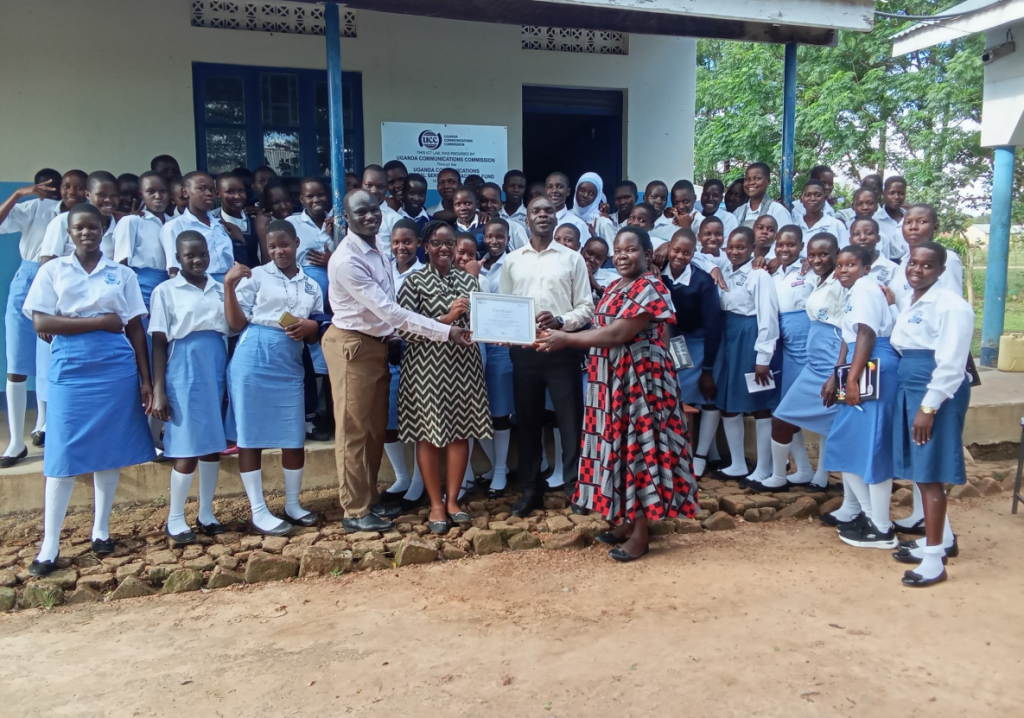
At St. Thomas Girls Secondary School in Kaberamaido District, the launch of the ICT Club created an important opportunity for learners to discover how technology can support creativity, confidence, innovation, and future career growth.
The ICT Club launch and training took place on 2nd March 2025 and was facilitated by Kyasima Freedom on behalf of Kisubi Associated Writers Agency (KAWA). The activity was conducted under the ICT Clubs programme supported by the Uganda Communications Commission (UCC) and UCUSAF.
The purpose of the visit was to officially launch the school ICT Club, orient learners and school leaders on the objectives of the programme, and equip students with foundational digital knowledge and practical ICT skills. The session also encouraged learners to use technology responsibly and creatively to solve challenges within their school and community.
The school leadership, led by Headteacher Mr Edyelu Patrick, together with ICT Teacher Mr Ojos Emmanuel, welcomed the initiative and engaged with the KAWA team on how the ICT Club can support practical digital learning at the school.
Before the training began, learners shared their expectations for the ICT Club. Many hoped to gain computer skills beyond normal classroom lessons. Others wanted to learn how to maintain and protect ICT equipment, improve their internet use, explore coding, create digital content, and understand innovation. Some learners also expressed interest in mentorship, teamwork, problem-solving, and preparation for future careers in the digital world.
During the training, learners were guided to understand that the ICT Club is not simply a space for computer practice. It is a platform for leadership, responsibility, creativity, teamwork, and innovation. The students were encouraged to see themselves as young digital problem-solvers who can use technology to improve learning, support their school, and respond to real community needs.
KAWA provided educational materials to support the launch and training. These included PowerPoint presentations, practical demonstrations, case studies, and interactive exercises. Learners were also introduced to the ICT Clubs website, www.ictclubs.ug, where they can access tutorials, innovation resources, and learning materials to continue developing their skills after the launch.
The official launch was conducted through a recorded speech message from the Executive Director of UCC, Mr Nyombi Thembo. His message emphasised the importance of digital skills, responsible use of technology, innovation, and the role of learners in sustaining school ICT laboratories. This helped students appreciate that they are part of a wider national programme promoting ICT use and digital transformation in schools across Uganda.
KAWA worked with the school administration, ICT teacher, and club patron to establish the ICT Club and support the formation of student leadership structures. Learners were guided on how the club will operate, why leadership is important, and how accountability can help sustain club activities. A standard ICT Club constitution template was also shared with the school to guide formal club operations.
The ICT Club Handbook was provided to support the patron, teachers, and student leaders throughout the year. The handbook will help guide club leadership, learner participation, innovation activities, digital skills development, and responsible technology use.
The digital skills training introduced learners to ICT laboratory management and sustainability, basic computer maintenance, troubleshooting, internet safety, cybersecurity awareness, coding, innovation, and Artificial Intelligence. The session encouraged students to handle ICT equipment responsibly, practise safe internet use, and apply digital skills to practical problem-solving.
The launch also highlighted key challenges affecting ICT use at the school. These included unreliable power supply, inadequate ICT infrastructure, difficulty accessing the network from the staff room, limited time for club activities, low digital literacy among some learners, and the need to sustain momentum after the launch. It was also noted that the ICT teacher is not on payroll, which may affect long-term ICT support at the school.
Another concern raised was that some keyboards on the laptops provided by NITA-U were not working, limiting learners’ ability to practise effectively. The administration also requested the relocation of the solar battery and the internet access point from their location at the time of training to a more suitable place connected to the computer laboratory.
These challenges show the need for continued investment in school ICT infrastructure, reliable power, functional equipment, connectivity, and teacher support. Strengthening these areas will help the ICT Club become more active, practical, and sustainable.
Learners were also informed about preparation for ANCC 2026. This encouraged them to take ICT Club activities seriously, strengthen teamwork, and begin developing practical projects and innovations that could represent their school in future technology platforms.
The expected outcomes of the St. Thomas Girls SS ICT Club include improved practical ICT skills, stronger learner ownership of school ICT resources, safe and ethical use of technology, increased interest in coding and innovation, and better preparation for future digital opportunities. The club is also expected to support mentorship, creativity, confidence, digital creation, and participation in ICT-related competitions.
KAWA encouraged the school to allocate regular time for ICT Club activities, strengthen administrative and teacher support, improve ICT infrastructure, repair faulty equipment, and continue receiving mentorship and follow-up training.
The launch at St. Thomas Girls Secondary School marked an important step in empowering learners with digital knowledge and innovation skills. With continued support from the school, KAWA, UCC, and UCUSAF, the ICT Club has the potential to become a strong platform for nurturing confident, skilled, and future-ready young women in technology.
KAWA sincerely appreciates UCC and UCUSAF for their continued support towards the establishment and training of ICT Clubs in schools across Uganda.