Otuboi Comprehensive SS Moves to Strengthen Digital Learning Through ICT Club Launch
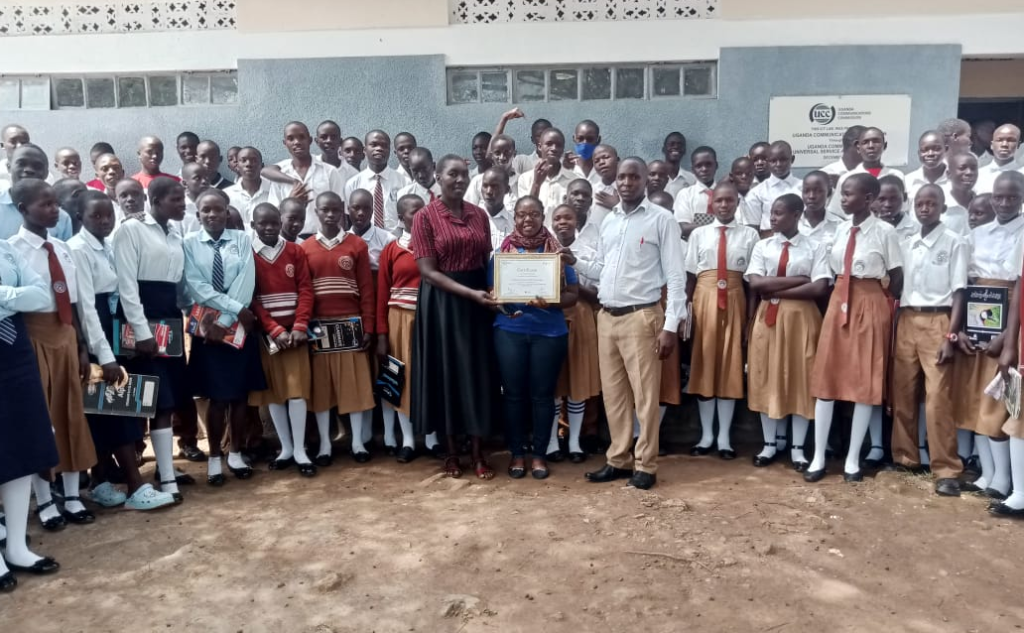
Otuboi Comprehensive Secondary School in Kalaki District has taken a significant step towards strengthening digital learning, student creativity, and technology-based problem-solving through the launch and training of its ICT Club.
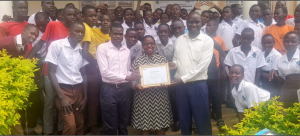
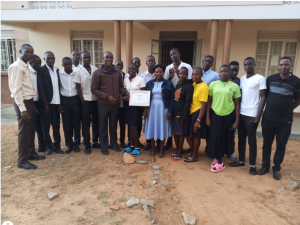
The activity took place on 27th February 2026 at the school in Otuboi Sub-county and was facilitated by Kyasima Freedom on behalf of KAWA. The launch was conducted under the national ICT Clubs initiative supported by the Uganda Communications Commission (UCC) and UCUSAF.
The visit aimed at formally introducing the ICT Club at the school and helping learners understand the value of digital skills in modern education, innovation, and future career development. The session also encouraged students to view ICT as a practical tool for solving real-life challenges within their school and surrounding community.
The school leadership, led by Headteacher Mr Ssenambi Muhammed, together with ICT Club Patron Ms Peru Hellen, welcomed the programme and engaged with the KAWA team on how the club can be supported and sustained at school level.
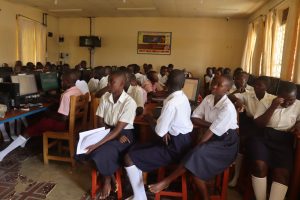
Before the training began, learners were invited to share what they hoped to gain from joining the ICT Club. Many students expressed interest in improving their computer skills and learning how to use digital tools more effectively. Others wanted to learn coding, understand how websites and applications are created, and explore how technology can help solve community problems. Some learners also said they hoped the club would build their teamwork, creativity, confidence, and readiness for future careers that require digital skills.
During the session, learners were guided to understand that the ICT Club is not only a space for using computers. It is a platform for leadership, responsibility, creativity, collaboration, and innovation. The club aims to strengthen learners’ digital knowledge, equip them with practical ICT skills beyond classroom learning, and promote responsible use of technology within the school.
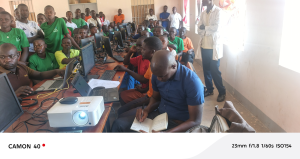
KAWA used presentations, guided discussions, demonstrations, and practical examples to show how ICT can support education, innovation, and community development. Learners were also introduced to different ICT learning opportunities that can help them continue developing their digital skills through mentorship, project work, and participation in innovation programmes.
The ICT Club at Otuboi Comprehensive Secondary School was officially launched as part of the wider national effort to promote digital literacy, creativity, and innovation among students in schools across Uganda. The launch created an organised platform for learners interested in technology to work together, learn new skills, and develop ideas that can benefit their school and community.
As part of the establishment process, student leaders were selected to guide the activities of the club and mobilise fellow learners to participate in ICT programmes. These leaders will help organise meetings, coordinate activities, and support innovation projects within the school. Learners were encouraged to demonstrate teamwork, responsibility, and commitment so that the club remains active and useful.
To support effective club management, the ICT Club Handbook and ICT Club Constitution sample were shared with the school. These materials will guide ICT teachers, the club patron, and student leaders in organising club meetings, clarifying leadership responsibilities, and supporting innovation activities throughout the year.
The training introduced learners to several key digital concepts, including the importance of ICT in education, basic coding and programming ideas, responsible use of digital technologies, and the role of collaboration in innovation. Students were also guided on how technology can be used to identify problems in their communities and develop creative solutions that improve people’s lives.
The launch and training helped learners develop a better understanding of the importance of ICT in education and future career opportunities. It also exposed them to how technology can address community challenges, why teamwork matters in developing innovation ideas, and how ICT competitions and innovation programmes can open new opportunities for students.
Learners were informed about opportunities to participate in national ICT innovation events such as the National Conference on Communications, NCC. They were encouraged to begin thinking about creative ICT project ideas that could represent their school in future competitions and innovation exhibitions.
KAWA also held discussions with the school administration, ICT Club patron, and teachers. These discussions emphasised the importance of regular ICT Club meetings, teacher mentorship, student participation, and strong support from school leadership to ensure that the programme is sustained.
Several challenges affecting ICT learning at the school were identified. The school has a limited number of computers, which are not enough to serve the large number of students interested in ICT activities. This reduces opportunities for learners to practise digital skills during training and club sessions.
It was also noted that some of the available computers are no longer functioning due to system breakdown. This has reduced the number of devices learners can use for practical ICT exposure, making it difficult for all interested students to gain hands-on experience.
The school also faces challenges with its N-Computing system. Repairing this system should be a priority so that computers that are currently not functioning can be restored and used again. A qualified ICT technician should assess the server computer, terminals, and network connections to identify and fix the faults.
Some N-Computing terminals are no longer operational and should either be repaired or replaced. Restoring these terminals would help the school serve more learners during ICT training sessions and improve access to practical digital learning.
Although the school has adequate space for ICT learning, the number of computers available remains too small compared to learner interest. The school therefore needs support in acquiring additional computers so that more students can participate actively in ICT Club activities.
KAWA further recommended that the school establishes a routine maintenance programme for ICT equipment. Regular monitoring and servicing will help identify technical problems early, prevent complete system failure, and keep the computer laboratory functional for learning.
Continuous ICT support and mentorship from KAWA, in partnership with UCC and UCUSAF, will also be important in strengthening ICT learning at Otuboi Comprehensive Secondary School. Follow-up training will help learners develop project ideas, improve digital confidence, and make better use of available ICT resources.
The launch at Otuboi Comprehensive Secondary School was a promising beginning. Despite the challenges of limited equipment and broken systems, learners showed strong interest in digital learning, coding, innovation, and technology-based problem-solving.
With improved equipment, repaired systems, regular maintenance, and continued mentorship, the ICT Club has the potential to become a strong platform for creativity, teamwork, responsible technology use, and future-ready learning.
KAWA sincerely appreciates UCC and UCUSAF for their continued support towards the establishment and training of ICT Clubs in schools across Uganda.