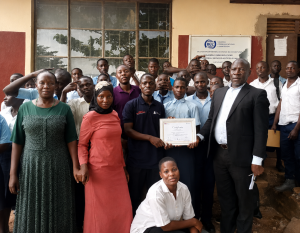
Kololo Public Seed SS Sets Its Digital Compass Through ICT Club Launch

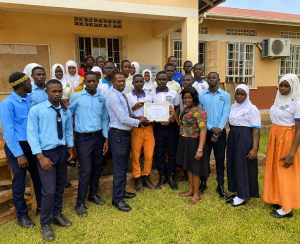
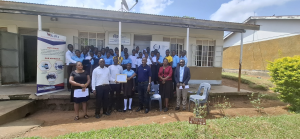
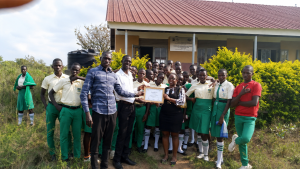
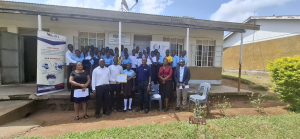
On Saturday, 28th February 2026, Kololo Public Seed Secondary School in Maracha District opened a new chapter in learner-centred digital education with the official launch and training of its ICT Club.
The session was facilitated by Noah Okwalinga on behalf of Kisubi Associated Writers Agency (KAWA), under the ICT Clubs programme supported by the Uganda Communications Commission (UCC) and UCUSAF. The activity brought together the school leadership, ICT teacher, and learners for an important conversation on how technology can support learning, creativity, responsibility, and innovation.
For Kololo Public Seed SS, the launch was not simply about forming another school club. It was about giving learners a platform where they can begin to think differently about computers, the internet, digital tools, and their role in solving problems around them.
Learners Arrive with Curiosity and Big Expectations
Before the training began, learners were invited to share what they expected from the ICT Club. Their responses reflected curiosity and ambition. Many wanted to gain practical computer skills beyond what they learn in class. Others hoped to learn how to maintain ICT equipment, use the internet better, explore coding, create digital content, and understand how innovation works.
Some learners also looked forward to mentorship, teamwork, problem-solving, and preparation for future careers in the digital world. This showed that the students were not only interested in using technology, but also in understanding how it can shape their future.
A Club Built Around Responsibility
During the orientation, learners were helped to understand that an ICT Club is not just a place for computer practice. It is a space where students can develop responsibility, leadership, teamwork, creativity, and practical digital confidence.
The KAWA team emphasised that learners have an important role to play in sustaining the school computer laboratory. They were encouraged to handle ICT equipment carefully, support proper use of school digital resources, and become active custodians of technology within the school.
The school leadership, led by Headteacher Mr Yiki George Adabo, together with ICT Teacher Mr Agaba, welcomed the programme and engaged with KAWA on how the ICT Club can be supported and sustained at school level.
Practical Training for a Digital Future
The training introduced learners to key digital skills and concepts, including ICT laboratory management, basic computer maintenance, troubleshooting, internet safety, cybersecurity awareness, coding, innovation, and introductory ideas in Artificial Intelligence.
KAWA used PowerPoint presentations, practical demonstrations, case studies, and interactive exercises to make the session engaging and practical. Learners were also introduced to the ICT Clubs website, www.ictclubs.ug, where they can continue accessing tutorials, innovation resources, and learning materials beyond the launch day.
This exposure helped learners appreciate that digital skills are not only useful for examinations, but also for communication, research, creativity, entrepreneurship, innovation, and future employment.
A National Call to Young Innovators
The official launch was supported by a recorded speech message from the Executive Director of UCC, Mr Nyombi Thembo. His message highlighted the importance of digital skills, responsible technology use, innovation, and the role of learners in sustaining school ICT laboratories.
Through this message, students at Kololo Public Seed SS were reminded that their ICT Club is part of a bigger national effort to prepare young people for the digital economy and strengthen ICT use in schools across Uganda.
Putting Structures in Place
A strong club needs organisation. For that reason, KAWA worked with the school administration, ICT teacher, and learners to support the establishment of the ICT Club and its student leadership structure.
Learners were guided on how the club will operate, why leadership matters, and how accountability can help keep activities active and meaningful. A standard ICT Club constitution template was shared with the school to guide formal club operations.
The ICT Club Handbook was also provided to support the patron, ICT teacher, and student leaders in planning meetings, organising activities, guiding members, and promoting innovation throughout the school year.
Looking Towards ANCC 2026
Learners were informed that ICT Club members are being prepared for future participation in platforms such as the Annual National Conference on Communications, ANCC 2026. This encouraged students to begin thinking about practical ICT project ideas that can represent their school in future innovation opportunities.
The club is expected to help learners build practical ICT skills, practise safe and ethical technology use, develop digital content, explore coding, and work together on solutions that respond to real school and community challenges.
Challenges to Address
The visit also identified likely challenges that may affect the growth of the ICT Club. These include unreliable power supply, inadequate ICT infrastructure, limited time for club activities, low digital literacy among some learners, and the need to sustain momentum after the launch.
These challenges show the importance of continued support, proper planning, teacher guidance, and follow-up mentorship if the club is to remain active and useful.
The Way Forward
Kololo Public Seed SS is encouraged to allocate regular time for ICT Club activities, strengthen support from the administration and ICT teacher, and continue receiving mentorship and follow-up training from KAWA, UCC, and UCUSAF.
Improved ICT infrastructure and reliable power will further help the club grow into a sustainable centre for digital learning, creativity, and innovation.
The launch at Kololo Public Seed Secondary School marked an important beginning. It gave learners a chance to see technology not only as something they use, but as something they can protect, explore, create with, and use to solve problems.
With continued support, the ICT Club has the potential to become a strong platform for learner leadership, responsible technology use, digital skills development, and future-ready innovation.
KAWA sincerely appreciates UCC and UCUSAF for their continued support towards the establishment and training of ICT Clubs in schools across Uganda.