Ogor Seed SS ICT Club Launch Brings Digital Hope to a Rural School Community
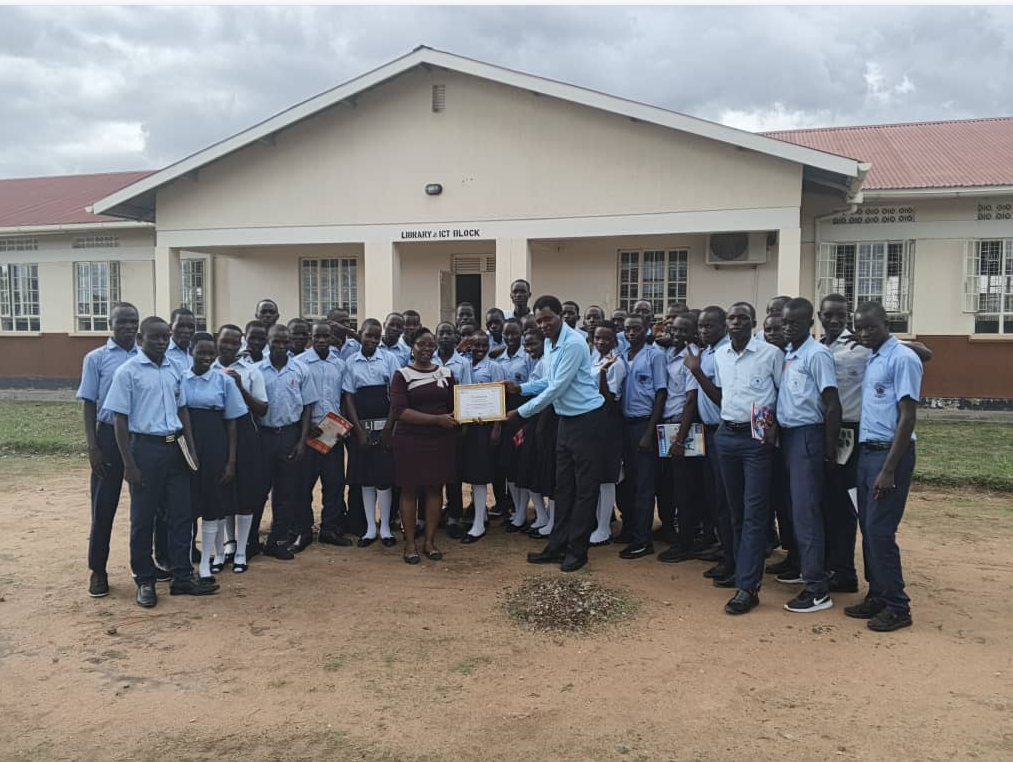
For Ogor Seed Secondary School in Otuke District, the launch of the ICT Club was more than the beginning of a new school activity. It was a meaningful step towards giving learners in Ogor Sub-county greater exposure to digital skills, innovation, creativity, and technology-based problem-solving.
The ICT Club launch and training took place on 3rd March 2026 and was facilitated by Kyasima Freedom on behalf of KAWA. The activity was conducted in partnership with the Uganda Communications Commission (UCC) and UCUSAF under the ICT Clubs programme, which supports schools to build active learner-led digital clubs.
The purpose of the visit was to officially launch the ICT Club at Ogor Seed Secondary School, orient learners and school leaders on the importance of digital skills, and introduce students to practical ICT knowledge that can help them solve problems in their school and community.
The school leadership, led by Headteacher Mr Adupa Richard, together with ICT Club Patron Mr Opio Ismail, welcomed the programme and participated in discussions on how the club can be supported and sustained at school level.
Before the training began, learners were invited to share what they expected from joining the ICT Club. Many students expressed interest in learning practical computer skills, coding, digital creation, internet use, and how technology can be used to address community challenges. Others hoped that the club would help them build teamwork, creativity, innovation skills, confidence, and readiness for future opportunities in the digital world.
During the session, learners were guided to understand that the ICT Club is not only about using computers. It is a platform for developing responsibility, leadership, teamwork, creativity, and problem-solving. Students were encouraged to see themselves as young innovators who can observe challenges around them and use technology to develop simple but useful solutions.
KAWA shared a number of learning materials and support resources during the launch and training. These included presentations, guided discussions, practical examples, and interactive learning activities designed to help students understand the value of ICT Clubs and digital innovation. Learners were also introduced to ICT learning opportunities that can support continued growth through mentorship, training, and project development.
The ICT Club at Ogor Seed Secondary School was officially launched as part of the wider UCC-supported initiative being implemented in schools through KAWA. The launch helped learners appreciate that they are part of a national programme promoting digital learning, innovation, and responsible use of technology among young people in Uganda.
KAWA also worked with the school administration and teachers to support the establishment of the club and guide the formation of student leadership structures. Learners were helped to understand the importance of organisation, accountability, teamwork, and regular participation in sustaining the club.
To support effective club operations, the ICT Club Handbook and ICT Club Constitution sample were shared with the ICT teachers and club patron. These materials will guide the school in managing the club, supporting student leaders, organising activities, and strengthening learner participation in innovation and digital skills development.
The digital skills training introduced learners to the role and benefits of ICT Clubs, the importance of digital literacy in modern education, basic coding and programming ideas, teamwork in innovation, and responsible use of digital tools. Students were also guided on how technology can be used to identify and solve practical challenges in their communities.
The session further highlighted how digital skills can support the development of websites, mobile applications, and simple digital tools relevant to sectors such as agriculture, health, education, and environmental protection. This helped learners connect ICT to real-life needs within their communities.
The expected outcomes of the Ogor Seed Secondary School ICT Club include improved practical ICT skills beyond classroom learning, increased interest in coding and innovation, stronger teamwork and leadership, safe and ethical use of technology, participation in ICT-related projects and competitions, and the development of student-led solutions for community challenges.
Learners were also informed about future opportunities to participate in national ICT competitions and innovation-related events. This encouraged them to take club activities seriously, begin thinking creatively, and work together on project ideas that could one day represent their school at a higher level.
KAWA engaged with the school leadership, including the headteacher, ICT Club patron, and teachers, to strengthen support for the programme. The discussions emphasised the need for continuous guidance, regular ICT Club meetings, and strong school commitment in order to sustain the club.
However, the school faces some challenges that may affect ICT Club activities. These include frequent power interruptions, weak mobile network coverage, lack of a network booster, and limited access to online learning resources. Because the school is located deep in a rural village, communication and internet access remain difficult, which affects research, online learning, and innovation activities.
To address these challenges, the school is encouraged to explore alternative power solutions such as solar power systems or backup batteries. Installation of a network booster would also improve signal strength and support better internet access for both teachers and students. In addition, offline digital learning systems such as KAWA CONNECT can help learners access ICT materials without depending heavily on internet connectivity.
Continuous follow-up training and mentorship from KAWA, UCC, and UCUSAF will also be important in helping students develop ICT projects, strengthen digital skills, and sustain club activities throughout the year.
Despite the challenges, the launch was successful and impactful. It marked an important step towards building a culture of digital learning and innovation at Ogor Seed Secondary School. With continued support, the ICT Club is expected to grow into a strong platform where learners can develop meaningful projects that positively impact their school and surrounding community.
Staff and students appreciated the initiative, and the club patron pledged to support the ICT Club leaders and guide students to become more creative and innovative.
KAWA sincerely appreciates UCC and UCUSAF for their continued support towards the establishment and training of ICT Clubs in schools across Uganda.