KAWA Equips ICT Patrons to Maintain School Computer Laboratories and Build Sustainable ICT Clubs
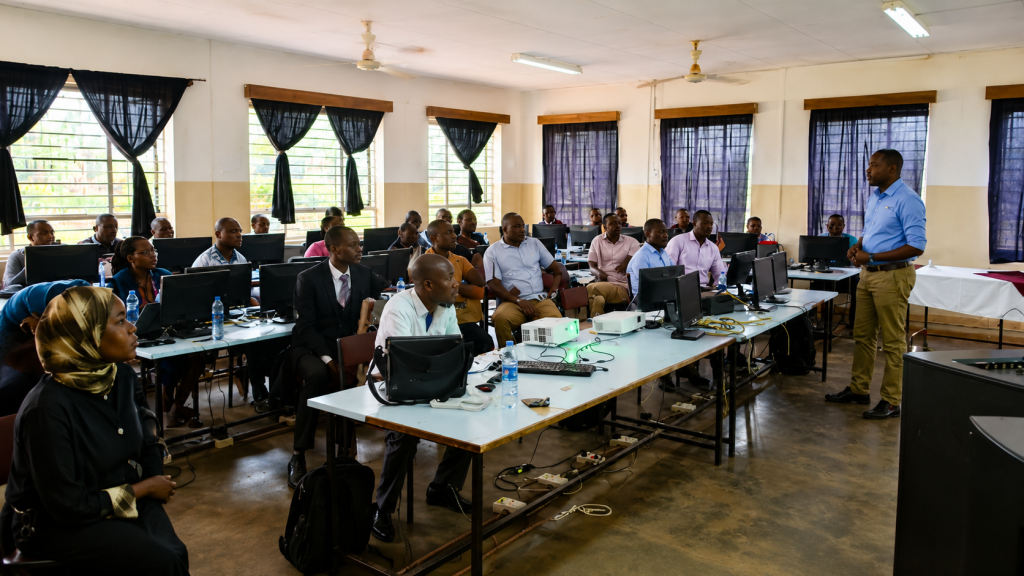
KAWA, with support from the Uganda Communications Commission through the UCUSAF Programme, successfully conducted an ICT Clubs Teachers’ Workshop on Wednesday, 1st July 2026, at the PMM Girls School Computer Laboratory in Jinja City. Organised as part of the ICT Clubs Programme, the workshop brought together ICT Patrons from participating secondary schools for a practical day of learning, collaboration and school-level action planning.
The training focused on strengthening the ability of ICT Patrons to maintain school computer laboratories, protect ICT equipment and establish active, practical and sustainable ICT Clubs. Participants were equipped with knowledge, tools and renewed motivation to guide learners in digital skills, creativity, innovation, teamwork, leadership, responsible technology use and problem-solving.

Building the Capacity of ICT Patrons
ICT Patrons play an important role in connecting learners, school administrators and technology. Their responsibilities extend beyond supervising computer lessons. They help learners use technology safely, organise practical ICT activities, protect school equipment, mobilise club members, maintain records and communicate the progress of their clubs.
The workshop was therefore designed to ensure that every participant returned to school confident and ready to take action. The training enabled patrons to understand the value and structure of ICT Clubs, appreciate the importance of laboratory maintenance, identify common computer problems, mobilise learners and administrators, prepare activity plans and develop practical steps for starting, reviving or strengthening their school clubs.
Before the workshop began, the PMM Girls School computer laboratory was organised to support presentations, demonstrations, discussions and group activities. Participants received practical materials, including ICT Club guides, sample constitutions, maintenance checklists, attendance registers, meeting-minutes templates, evaluation forms and school action-plan templates.
During registration, every participant was also invited to share one major challenge affecting the establishment or sustainability of their ICT Club. This gave facilitators an early understanding of the realities in participating schools and helped ensure that the day’s discussions responded to genuine school needs.
Participating Schools and Districts
The workshop brought together representatives from 35 secondary schools. The schools and their respective districts were recorded as follows:
| No. | District | School |
|---|---|---|
| 1 | Amuria | Ococia Girls Secondary School |
| 2 | Budaka | Kameruka Seed Secondary School |
| 3 | Bududa | Bulucheke Secondary School |
| 4 | Bukedea | Malera Kabarwa |
| 5 | Bukwo | Chepkwasta Secondary School |
| 6 | Bulambuli | Bukhalu Seed Secondary School |
| 7 | Butaleja | Busaba Seed Secondary School |
| 8 | Buyende | St. Peter’s Secondary School Namulikya |
| 9 | Iganga | Nawanyingi Seed Secondary School |
| 10 | Jinja | Kiira College Butiki |
| 11 | Jinja | Mpumudde Seed Secondary School |
| 12 | Jinja | Pilkington College Maguluka |
| 13 | Kaberamaido | St. Thomas Girls Secondary School |
| 14 | Kalaki | Lwala Girls Secondary School |
| 15 | Kalaki | Otuboi Comprehensive Secondary School |
| 16 | Kaliro | St. Philips College Nawaikoke |
| 17 | Kamuli | Greenhill College Bulopa |
| 18 | Kapelbyong | Obalang Seed Secondary School |
| 19 | Karilo | Dr. Forer Memorial College |
| 20 | Katakwi | Palam Seed Secondary School |
| 21 | Katakwi | Usuk Secondary School |
| 22 | Kibuku | Kagumu Secondary School |
| 23 | Kween | Kworus Secondary School |
| 24 | Luuka | Walibo Seed Secondary School |
| 25 | Mayuge | Malongo Secondary School |
| 26 | Mayuge | Mayuge Hill Secondary School |
| 27 | Mbale | Bufumbo Secondary School |
| 28 | Namutumba | Kangulumo Secondary School |
| 29 | Pallisa | Agule High School |
| 30 | Pallisa | Apopong Seed Secondary School |
| 31 | Serere | Kagwara Seed Secondary School |
| 32 | Sironko | Bugambi Secondary School |
| 33 | Sironko | Nambulu Secondary School |
| 34 | Sironko | Nalusala Seed Secondary School |
| 35 | Soroti | Tubur Senior Secondary School |
The wide representation gave participants an opportunity to learn from schools at different stages of ICT Club development. Some schools already had active clubs, while others were preparing to establish new clubs or revive previously inactive ones.
Opening the Workshop with a Shared Vision
The programme began with an opening prayer and participant introductions. Each patron shared their name, school, district, the current status of their ICT Club and one ambition they had for its future.
This exercise immediately highlighted the different experiences represented in the room. Some patrons were already conducting activities with learners, while others were dealing with limited access to computers, inactive leadership structures, irregular meetings or low learner participation.
The host school welcomed the participants and recognised the contribution of UCC, UCUSAF, KAWA and the invited schools to the ICT Clubs Programme. Participants were encouraged to engage actively in discussions, demonstrations and practical sessions.
The City Education Officer officially opened the workshop and emphasised the growing importance of digital literacy in secondary education. Particular attention was given to the responsibility of teachers as champions of technology, the need to care for government-supported ICT equipment and the value of learner clubs in developing practical digital competencies.
Understanding the Purpose of School ICT Clubs
During the overview of the ICT Clubs Programme, participants were reminded that an ICT Club should provide learners with opportunities to practise technology beyond classroom theory.
An effective club can help learners improve their typing, online and offline research, digital communication, presentation development, basic troubleshooting, digital safety, coding, web activities and problem-solving abilities. It also creates space for learners to develop confidence, creativity, teamwork and leadership.
The role of the patron was presented as one of guidance and coordination. Patrons were encouraged to support learner leaders, organise regular meetings, protect laboratory equipment, link the club with school administration, keep accurate records, promote equal participation among girls and boys and communicate challenges and success stories.
Participants also examined the recommended leadership structure of an ICT Club. Depending on the needs of the school, this may include a patron, chairperson, vice chairperson, secretary, treasurer, publicity officer, technical team and general membership.
Practical Training in Computer Laboratory Maintenance
One of the major sessions of the day addressed computer laboratory maintenance and the proper use of ICT equipment.
Participants discussed the reality that computers can only support teaching, learning and club activities when they are clean, safe, functional and properly managed. Poor maintenance can lead to preventable breakdowns, loss of learning time, costly repairs and frustration among teachers and learners.
The facilitators introduced practical daily laboratory-care routines. These included inspecting the room before use, controlling dust, keeping furniture properly arranged, checking plugs and cables, maintaining ventilation, following correct start-up and shutdown procedures and ensuring that equipment is safely positioned.
Weekly maintenance tasks were also examined. Patrons were encouraged to oversee the safe cleaning of keyboards, mice and computer surfaces, inspect cables, check the condition of the laboratory environment, carry out basic system checks where possible and update the laboratory logbook.
The session further emphasised the need for clear rules governing learner access to computers. Learners should use equipment with permission, avoid installing unauthorised software, refrain from deleting other users’ files, avoid changing system settings and report faults immediately.
Power safety received particular attention. Participants discussed correct shutdown procedures, the safe use of sockets and extension cables, the value of surge protection, the risks of overloading power points and the importance of reporting electrical faults to school administrators.
Strengthening Laboratory Records and Accountability
Good record keeping was presented as an essential part of computer laboratory management. Even where a school has limited technical support, accurate records can help administrators understand the condition of the laboratory, identify recurring problems and plan for maintenance.
ICT Patrons were encouraged to maintain:
- A computer laboratory usage timetable
- An updated equipment inventory
- A fault-reporting book
- A maintenance checklist
- An ICT Club attendance register
- A borrowing or equipment-movement record
- An incident-report book
The practical demonstration showed participants how to switch computers on and off correctly, safely clean ICT equipment, inspect cable connections, arrange workstations, identify visible faults and complete a maintenance checklist.
Participants then worked in groups to conduct a laboratory-maintenance walkthrough. They assessed cleanliness, ventilation, power safety, cable arrangement, equipment handling, laboratory rules, record keeping, security and access control. Each group identified one good practice and one area requiring improvement.
Responding to Common Computer Laboratory Challenges
A second practical session examined challenges frequently experienced in school computer laboratories.
These included computers failing to power on, monitors showing no display, keyboards or mice failing to respond, slow computers, internet-connectivity problems and the misuse of equipment by learners.
For each challenge, the facilitators explained simple and safe checks that patrons could perform before requesting advanced technical assistance. These included confirming power availability, inspecting sockets and switches, checking monitor and device connections, examining cables, reviewing available storage space, closing unnecessary programs and checking network devices.
Participants also considered ways of reducing learner misuse. Proposed approaches included displaying clear laboratory rules, assigning responsible learner laboratory monitors, maintaining sign-in records, supervising computer sessions, teaching responsible technology use and involving ICT Club leaders in promoting discipline.
An important message from the session was that ICT Patrons were not expected to become advanced computer technicians after a single workshop. Their immediate responsibility was to prevent avoidable damage, recognise basic problems, document faults accurately, perform safe first-level checks and know when professional technical support was required.
Moving from ICT Club Formation to Sustainability
The workshop did not focus only on establishing ICT Clubs. It also addressed the more difficult question of how to keep them active over time.
Participants explored the characteristics of a sustainable club. Such a club has committed members, functioning learner leadership, supportive school administrators, regular meetings, organised records, practical activities and visible benefits for the school community.
Several common causes of club inactivity were identified. These included irregular meetings, limited administrative support, busy patrons, poor learner mobilisation, fear of damaging computers, lack of activity ideas, weak learner leadership, inadequate record keeping, poorly maintained laboratories and restricted access to equipment.
To address these challenges, participants were encouraged to build strong relationships with school administrators, recruit and motivate learners, establish functional leadership structures, prepare realistic activity plans, maintain records and celebrate learner achievements.
The facilitators emphasised that an ICT Club should not exist only for meetings and speeches. Learners need practical opportunities to apply technology. Suggested activities included typing practice, computer care, digital research, presentation development, poster design, article writing, basic coding, simple web activities, ICT quizzes, digital-safety awareness and technical support for school events.
Designing Practical ICT Club Activity Plans
Participants worked in groups to prepare simple one-month ICT Club activity plans.
Each plan considered the proposed meeting days, club leadership, practical activities, required materials, expected learner outputs, involvement of the school administration, participation of girls and beginners and the records that would be maintained.
The group discussions focused on four important questions:
- What is the biggest challenge affecting ICT Clubs in schools?
- What can an ICT Patron do immediately after returning to school?
- What support is required from the headteacher?
- Which activities will motivate learners to join and remain active in the club?
Groups presented their proposals using a simple implementation format covering the identified challenge, the proposed solution, the person responsible and the expected timeline.
The discussions demonstrated that many challenges affecting ICT Clubs can be reduced through better organisation, regular meetings, learner participation, supportive school leadership, clear laboratory rules and consistent planning.
Every School Leaves with a 30-Day Action Plan
A major output of the workshop was the development of a school-specific, 30-day action plan by every participating ICT Patron.
The action plans included immediate steps such as meeting the headteacher, identifying or confirming ICT Club members, electing learner leaders, preparing a termly activity plan, displaying computer-laboratory rules, beginning regular club meetings and submitting an implementation report.
Participants exchanged their plans for peer review. This allowed colleagues to assess whether the proposed actions were clear, practical, realistic and achievable within the available time and school environment.
The workshop coordinator explained that implementation would be followed up through telephone calls, WhatsApp communication, school reports and physical visits where possible. This reinforced the understanding that the workshop was not an isolated event but part of a continuing process of school-level support and accountability.
Feedback and the Way Forward
During the final plenary session, participants shared the lessons they had gained, the first actions they intended to take after returning to school and the support they would require.
The agreed way forward included joining the official ICT Clubs communication platform, submitting school action plans, starting or reviving school clubs, conducting at least one ICT Club meeting within two weeks and preparing monthly implementation reports.
The monthly reports are expected to capture the number of meetings held, the number of active members, activities completed, challenges encountered, support required and available evidence of implementation.
Participants also completed evaluation forms covering the usefulness of the workshop, the most helpful sessions, practical skills gained, areas that could be improved and their readiness to implement the agreed actions.
The workshop concluded with remarks from the Guest Speaker and the ASSHU Representative. The closing message called for active ICT Clubs in every participating school, responsible management of computer laboratories and greater recognition of ICT skills as essential for teaching, learning, innovation and future employment.
Key Outcomes of the Workshop
By the end of the training, ICT Patrons had gained practical knowledge in computer laboratory maintenance, safe equipment use and simple first-level troubleshooting. They had also strengthened their understanding of how to start, revive and sustain ICT Clubs.
Participants prepared activity plans and school-specific 30-day action plans. They received templates for club administration, laboratory maintenance, record keeping and reporting. A communication and follow-up platform was also established or strengthened to support continued learning and implementation.
Most importantly, the patrons returned to their schools with a renewed commitment to organise practical ICT activities, involve learners in club leadership, protect computer equipment and work more closely with school administrators.
Lessons and Recommendations
The workshop demonstrated that ICT Patrons are willing to support school ICT Clubs when they receive practical guidance, simple management tools and continued encouragement.
It also revealed that many participating schools face similar difficulties. These include limited maintenance knowledge, weak laboratory management, irregular meetings, inadequate activity planning and low learner mobilisation. However, many of these challenges can be addressed through consistent organisation, learner leadership, administrative support, regular supervision and structured follow-up.
Schools were encouraged to officially recognise ICT Clubs and provide time, space and administrative support for their activities. Headteachers were urged to work closely with ICT Patrons, while patrons were encouraged to submit monthly progress reports and maintain updated laboratory records.
The workshop further recommended practical activities that solve real school problems, stronger learner leadership, recognition of active clubs and further refresher training in computer maintenance, digital safety, coding, innovation and ICT Club management.
Advancing Digital Transformation Through School ICT Clubs
The ICT Clubs Teachers’ Workshop achieved its central purpose of equipping ICT Patrons with practical knowledge, relevant tools and clear plans for maintaining computer laboratories and managing active ICT Clubs.
The training strengthened the patrons’ ability to guide learners, protect ICT equipment, organise regular activities, maintain accurate records, involve school administrators and prepare realistic implementation plans.
KAWA appreciates the Uganda Communications Commission and the UCUSAF Programme for supporting the ICT Clubs initiative. Continued collaboration between implementing partners, school leaders, teachers and learners will enable ICT Clubs to grow into practical centres of digital learning, creativity, teamwork, responsible technology use and innovation.
With consistent implementation and follow-up, the participating schools can transform their computer laboratories from facilities used mainly during scheduled lessons into active learning spaces where young people explore ideas, develop useful digital skills and prepare for an increasingly technology-driven future.